June 5
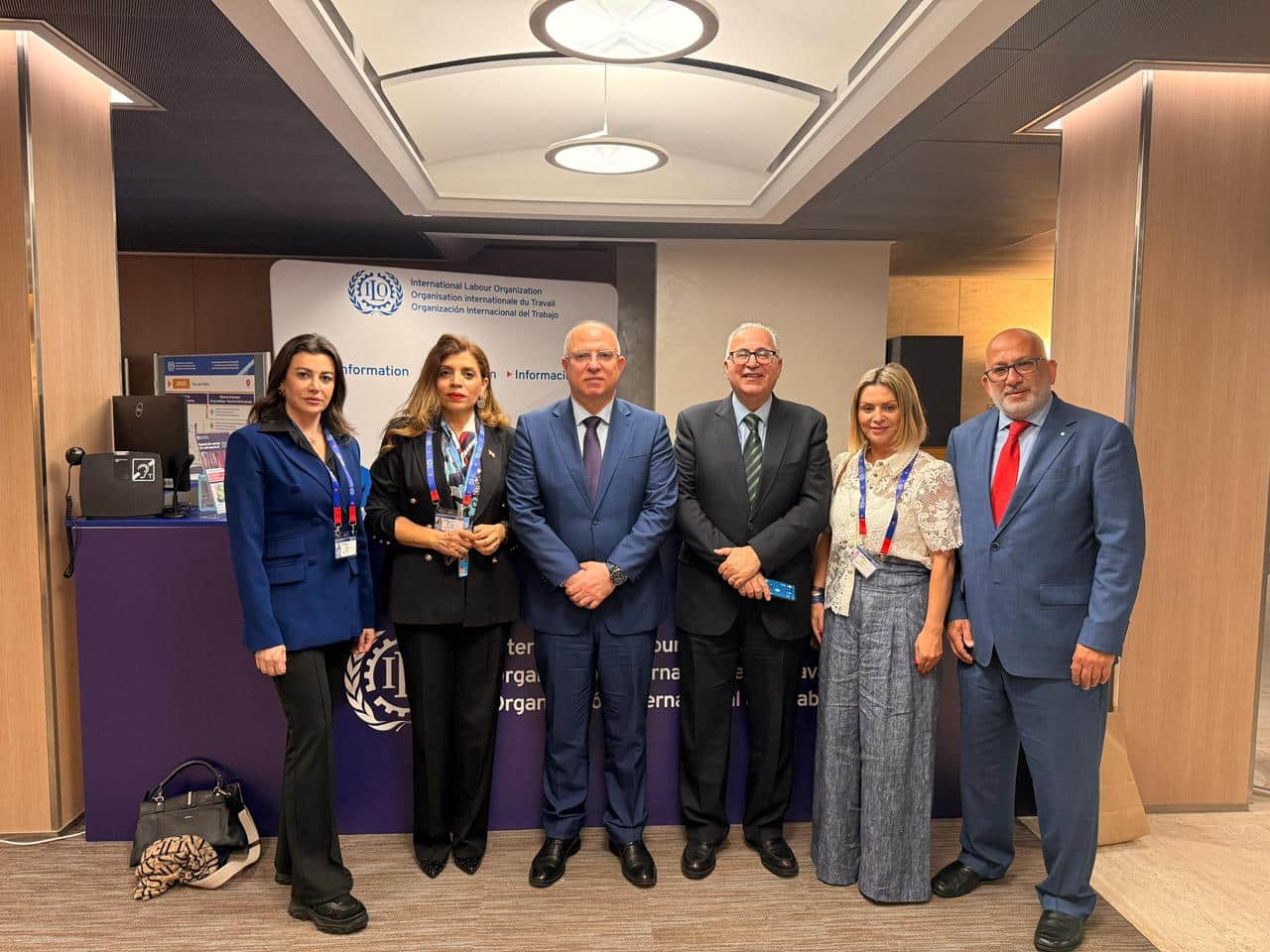
The Association of Lebanese Industrialists actively participated in the opening of the 114th Session of the International Labour Conference, held at the United Nations headquarters in Geneva from May 31 to June 12.
Representing Lebanon’s Employers’ Group, the delegation took part alongside the official Lebanese tripartite delegation composed of the government, employers, and workers represented by the General labor union in Lebanon, headed by Minister of Labour Dr. Mohammad Haidar.
The Employers’ delegation was led by Eng. Mounir El Bsat, Secretary of Foreign Relations at the Association of Lebanese Industrialists, and included industrialists Mrs. Randala Kassem and Mrs. Patricia El Hachem, as well as the Association’s General Manager Mr. Talal Hijazi.
The delegation actively contributed to the conference’s discussions and committees addressing key topics, including social dialogue and tripartism, decent work in the platform economy, gender equality in the workplace, and various governance and regulatory committees such as the Finance Committee, Credentials Committee, and the Committee on Legal Standards.
On the sidelines of the conference, the delegation held a series of productive meetings with the Bureau for Employers’ Activities at the International Labour Organization (ACTEMP), headed by Ms. Debra France-Massin and her team, as well as with Mr. Roberto Suárez Santos, Secretary-General of the International Organisation of Employers, and Mr. Paolo Salvai, Head of the International Training Centre of the ILO in Turin.
The meetings focused on current projects implemented in Lebanon in cooperation with the Association of Lebanese Industrialists, while also highlighting the severe economic challenges facing productive enterprises due to the ongoing economic crisis and the war affecting Lebanon and the region.
The delegation called on the International Labour Organization, in coordination with international organizations and donor agencies, to intensify efforts toward finding urgent solutions to the current crisis and developing practical plans to support Lebanon’s economic recovery and revival once hostilities and military operations come to an end.


+